

Washington, D.C. has its own property insurance facility
The District of Columbia Property Insurance Facility, or DCPIF, is the District's FAIR Plan mechanism. Its official website describes homeowners, dwelling, and commercial property coverage for qualified properties that cannot obtain essential insurance in the competitive market. A DISB examination report also identifies the facility's FAIR Plan role. These sources establish the organization; they do not determine eligibility or coverage for an individual property.
The District is a separate insurance jurisdiction. A Maryland or Virginia program should not be assumed to insure a D.C. address merely because its office or administrator is nearby. The property location, ownership, use, and contract matter. This guide is independent education and has no affiliation with the facility or government. It explains how to research DCPIF alongside private insurance without presenting a quote, application, referral, or promise that a particular building will be accepted.
The facility is not a D.C. government agency
DCPIF's producer information explicitly says that it is not a District government agency. It describes an association composed of licensed property insurers in the District. This is an important distinction for consumers who encounter the words FAIR Plan or state plan in search results. A legislatively established insurance mechanism can have a public purpose without being the government itself. This website is also separate from that mechanism.
When checking an offer, distinguish the facility, the professional assisting the applicant, the insurer named on the policy, and the regulator. These roles can appear in different documents. A familiar logo or official-sounding domain does not substitute for verifying the entity. The actual legal name and policy form should be retained in the household's research file. That makes it easier to understand who can answer underwriting, payment, complaint, and claim questions without assuming all parties have the same authority.
DCPIF offers more than a single fire-only form
The facility's forms and information page provides separate homeowners and dwelling or commercial materials, along with notices concerning additional coverages and deductibles. Its homepage distinguishes owner-occupied homeowners coverage from dwelling property arrangements. A consumer should not describe every DCPIF policy as an identical basic fire contract. Conversely, the word homeowners does not establish that every desired endorsement, cause of loss, or expense is included.
A useful comparison identifies the form and then separates dwelling, contents, other structures, loss of use, and liability. For each, record the limit, deductible, valuation method, and exclusions. Where a property has more than one unit or a mixed use, determine which parts are actually insured. A short summary may not answer these questions. The relevant documents are the proposed declarations, policy forms, endorsements, and written explanations tied to the particular property.
Rowhouse ownership and shared construction are different issues
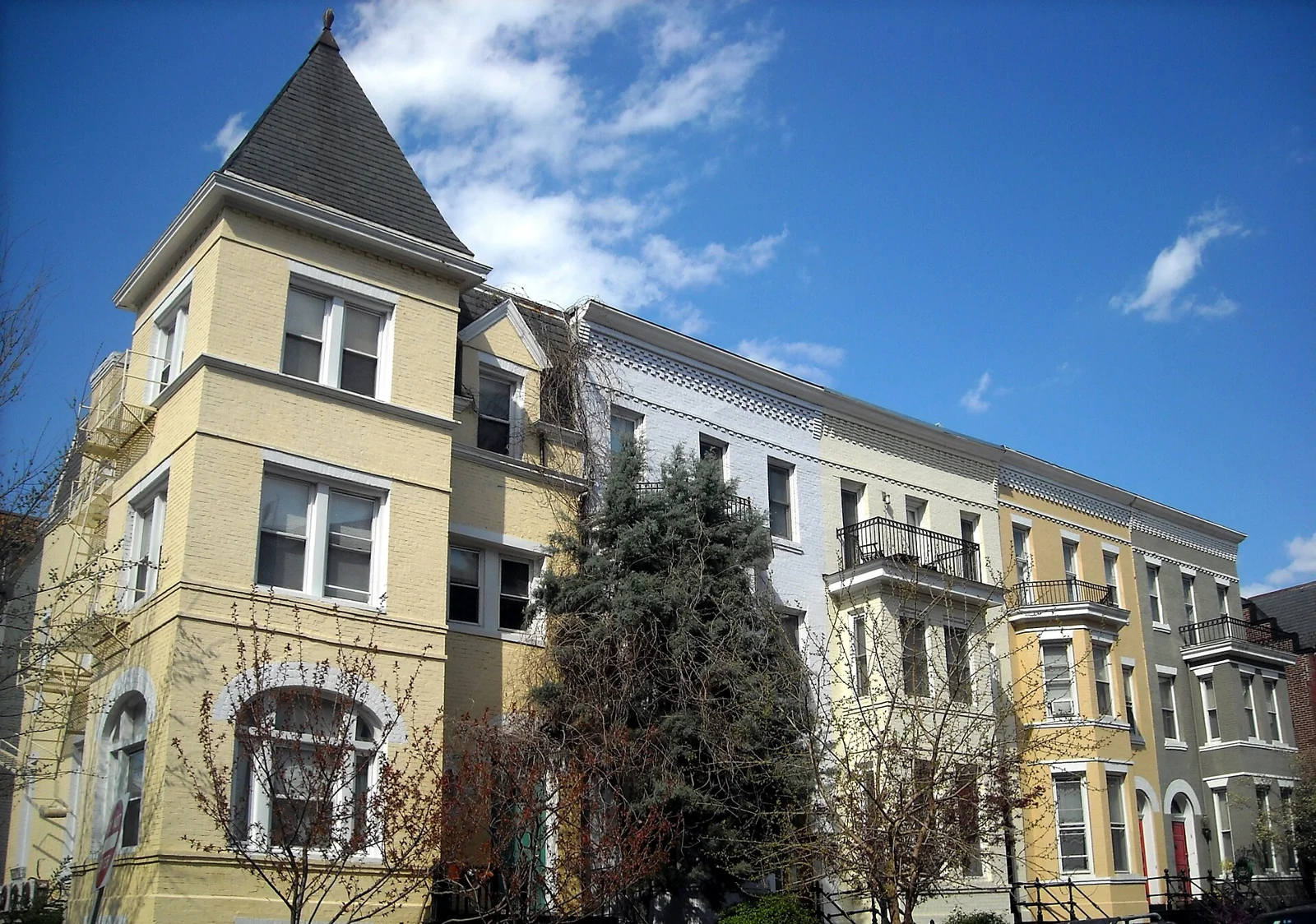
An attached rowhouse can be individually owned even though its walls adjoin neighboring buildings. A condominium can look like an ordinary house while having shared ownership and insurance responsibilities. The building's appearance is therefore not enough to choose the correct contract. Identify the legal ownership and any governing documents. Record additions, roof arrangements, detached structures, and spaces used by others. A shared physical feature should not be casually assumed to be insured by someone else's policy.
In a hypothetical rowhouse loss, the homeowner may need to understand which damaged property belongs to them, whether access through neighboring property is needed for work, and what their own contract addresses. Those are different questions from whether a neighbor is legally responsible. The insurance file should not promise recovery from another owner or insurer. A clear description of the building and ownership makes the coverage discussion more precise before a loss creates time pressure.
Condominium owners need to compare two sets of documents
A unit owner's policy should be evaluated together with the association's governing documents and master insurance information. The association may insure certain building elements while the owner remains responsible for belongings, improvements, temporary accommodation, or personal liability. The actual division varies with the documents and applicable law. A statement that the building is insured is not a complete answer to what the individual household would need after damage.
An illustrative owner has upgraded cabinets, flooring, and fixtures inside a unit. The comparison should identify whether those improvements fall within the association's responsibility or the unit policy, and how they are valued. Any loss-assessment coverage should be read for its trigger, exclusions, and deductible-related limitations. A master-policy deductible is not automatically covered in full by a unit-owner endorsement. Keeping the two policy sets together helps reveal questions that a declarations page alone cannot resolve.
Basement apartments and room rentals change the description
A D.C. residence may include a separately occupied lower level, rented rooms, or a home-based business. Those uses should be described accurately when an application asks about occupancy or activities. The landlord's building interest is different from a tenant's contents, and rental income is different from an owner's additional living expenses. A home can be partly owner-occupied without every exposure fitting an ordinary single-family description.
A practical occupancy schedule lists each area, who uses it, whether rent is paid, and whether any space is vacant. It should also identify shared utilities and relevant improvements. For a hypothetical owner renting a basement, the appropriate comparison may involve property, liability, rental-income, and water questions at the same time. A policy should not be selected on an inaccurate description merely because it produces a simpler quote. If use changes after issuance, the insurance arrangement should be reviewed against the new facts.
Water exposure requires more than a basement endorsement label
For a lower-level living space, identify the source of possible water damage rather than asking only whether the policy has water coverage. A supply-pipe failure, sewer backup, groundwater seepage, and surface flooding can be addressed differently. The contract should specify the cause of loss and any applicable sublimit. A device intended to prevent damage does not create coverage, and a map describing flood risk does not determine how a homeowners claim will be adjusted.
Inventory finishes, heating or electrical equipment, and belongings below grade. In a hypothetical comparison, one offer addresses a certain backup event while another leaves it unresolved; neither should be assumed to cover every type of flooding. The household should identify the relevant endorsement or separate insurance and the cost it would retain after a loss. The DISB financial resource booklet identifies flood insurance as a distinct resource, reinforcing the need to investigate it separately.
Historic features and rebuilding costs deserve careful estimates
A D.C. property's sale price can reflect location and land as much as its structure. Rebuilding an older home can involve different costs, including labor, materials, demolition, access, and applicable requirements. Describe the building's construction, additions, finishes, and distinctive features accurately. Where preservation or code issues may affect work, identify the question for the appropriate professional rather than assume the insurance automatically funds every required expense.
The NAIC explanation of actual cash value and replacement cost helps distinguish settlement methods. An illustrative homeowner may discover that equal dwelling limits still produce different retained expenses because valuation or endorsements differ. Compare the roof, interior finishes, contents, and separate structures as needed. A replacement estimate is not itself a policy guarantee, and a mortgage balance is not necessarily the correct insurance value. The limit and settlement conditions must be read together.
Private insurance remains a meaningful avenue for research
DCPIF's official description encourages consumers to seek coverage in the competitive market. A private-market decline should be recorded with its actual reason, date, and the information reviewed. One company's unwillingness to insure a particular roof or occupancy does not establish that every company uses identical standards. A more complete record may clarify the issue, although it does not guarantee an offer. A search should remain factual rather than relying on an invented rule about how many claims every insurer accepts.
Where specialty or surplus-lines insurance is considered, identify that arrangement separately from DCPIF. Review the insurer's legal name, the placement professional's authority, policy forms, exclusions, total charges, and financial protections. A policy can be available while leaving an important household exposure uninsured. A familiar company name can also appear through different subsidiaries or products. The correct comparison is between the actual contracts, not between general labels such as standard, high risk, or last resort.
Applications and inspections depend on the present condition
DCPIF's forms page requests supporting information and distinguishes some vacancy and ownership circumstances. A household should use current instructions for the actual application rather than assume a generic checklist is complete. Photographs, accurate occupancy, notices, and ownership information can be important. If the applicant is an entity or the property is vacant, additional questions may apply. A program's ability to consider a category does not establish automatic acceptance of every property within it.
For a house under renovation, keep separate records of existing damage, completed work, and planned work. A new contract should not be expected to pay for old damage merely because repairs are ongoing. If an inspection identifies a concern, preserve the exact observation and the evidence used to address it. A contractor estimate, invoice, and final inspection each answer different questions. An accurate file is more useful than a broad statement that the building has been updated, especially when different systems were repaired at different times.
Several claims need a clear, consistent explanation
A chronology should show the cause and repair status of each loss. Distinguish unrelated events from a recurring source. A plumbing repair that replaced the failed component can be documented differently from a cosmetic repair that left the source unresolved. Keep insurer reports, invoices, and photographs together. If an entry is wrong, identify the particular error and retain the correction request. A closed financial claim does not necessarily prove that all physical repairs are complete.
Answer application questions as written, including reported losses or cancellations where requested. A zero-dollar event should not automatically disappear from the history, and a general coverage inquiry should not casually be described as a claim without checking what happened. Inconsistent answers can make a comparison unreliable even when the underlying issue is explainable. This guide does not assign a universal claim threshold to District insurers or the facility. The actual product standards, applicable rules, and property facts need to be considered.
Nonrenewal and new coverage should have a documented handoff
Save the notice, its stated termination date, and any separate repair or response deadline. If the reason appears factually incorrect, a reconsideration request can be supported by documents. At the same time, replacement research can continue. A complaint or pending review does not itself demonstrate that the existing policy remains in force. The District's current rules and the actual circumstances should be used for questions about notice rights, rather than a deadline quoted from another jurisdiction.
A quote, submitted application, payment, and effective policy are separate stages. The facility's online information expressly distinguishes submission from a binder of coverage. Written confirmation should establish the actual effective date and outstanding requirements. A lender may need evidence and may coordinate payment through escrow, but those tasks do not alter coverage terms. If several policies are intended to work together, their dates and insured interests should be checked so that an anticipated arrangement is not mistaken for protection already in force.
A small condominium association still needs a coordinated comparison
In an illustrative two-unit District condominium, the owners may know each other well and share repair decisions informally. That familiarity does not answer how a master-policy deductible would be allocated after a loss, which interior improvements each unit owner must insure, or whether a proposed assessment is covered by an individual policy. The declaration, bylaws, master policy, and unit policy each answer different parts of the question.
A short comparison can identify who insures the roof, common stairs, original interior components, and later improvements. It should also record any uncertainty about a deductible or assessment. An individual policy's loss-assessment provision has its own terms and should not be treated as reimbursement for every association bill. Resolving the allocation in writing makes a comparison useful even when the building has very few owners.
Official verification makes search results more useful
Neutral searches such as “District of Columbia FAIR Plan” and “District of Columbia high risk homeowners insurance” can identify information for further investigation. Search ranking is not an endorsement, and a page's wording does not establish its affiliation. DCPIF's official site and the Department of Insurance, Securities and Banking, or DISB, have different roles. The facility supplies program information; the regulator provides official oversight and consumer resources. This website performs neither function.
A final research worksheet should identify the exact form, ownership, occupancy, rebuilding assumptions, water protection, liability, deductibles, and unresolved conditions. For a condominium, retain the association documents with it; for a mixed-use or rental property, retain the occupancy schedule. Revisit the comparison after major work or changes in use. The District's property facility can be an important mechanism, while private insurance remains worth investigating. The aim is a clear account of the actual protection available and the expenses or exposures that remain with the household.